Buy lover.uk ?
We are moving the project
lover.uk .
Are you interested in purchasing the domain
lover.uk ?
domain@kv-gmbh.de · 0541-91531010
Buy lover.uk ?
What are reactants and products?
Reactants are the starting materials in a chemical reaction that undergo a change to form new substances called products. Reactants are consumed during the reaction, while products are the end result of the reaction. The reactants are typically written on the left side of a chemical equation, while the products are written on the right side. **
What are limiting reactants in chemistry?
Limiting reactants, also known as limiting reagents, are the reactants in a chemical reaction that are completely consumed, thus limiting the amount of product that can be formed. In other words, they determine the maximum amount of product that can be produced in a reaction. The concept of limiting reactants is important in stoichiometry, as it helps to determine the theoretical yield of a reaction and identify the excess reactant that will be left over after the reaction is complete. **


Similar search terms for Reactants
Top-Angebote
Products related to Reactants:
-
Livabliss Desire Traditional Solid Area Rug"Presenting the ""Desire"" hand made rug from India, designed to bring an exotic touch of elegance to your living space. With its beautiful style and luxurious wool construction, this rug is not just a floor covering but a fashion statement."474,99 $*Shipping: 0,00 $Secure redirect to the provider
-
Youfap Market Memory Foam Wedge, Couple Pillow For Intimacy & Support, Lumbar Neck Support Memory Foam Wedge, Couple Pillow For Intimacy & Support, Lumbar Neck SupportUltimate Comfort and Support for Intimacy Designed for couples seeking better comfort, the Couple Pillow for Intimacy & Support features a memory foam wedge that helps achieve the perfect position during intimate moments. Its unique shape promotes...99,97 $*Shipping: 0,00 $Secure redirect to the provider



-
How do you calculate reactants in chemistry?
To calculate reactants in chemistry, you first need to write a balanced chemical equation for the reaction. Then, determine the molar ratio between the reactants and the product in the balanced equation. Next, calculate the number of moles of the known reactant using its given mass or volume and its molar mass. Finally, use the molar ratio to calculate the number of moles of the other reactant needed for the reaction. **
-
Are only reactants given in redox reactions?
No, redox reactions involve both reactants and products. In a redox reaction, one substance undergoes oxidation (loses electrons) while another undergoes reduction (gains electrons). Therefore, both the reactants and products are involved in the redox process. The reactants are the starting materials that undergo the redox reaction, while the products are the resulting substances after the redox reaction has occurred. **
-
How do you calculate the reactants in chemistry?
To calculate the reactants in a chemical reaction, you first need to write out the balanced chemical equation for the reaction. Then, you can use stoichiometry to calculate the amount of reactants needed based on the desired amount of product. This involves using the coefficients in the balanced equation to set up conversion factors and then using these conversion factors to calculate the amount of reactants required. Finally, you can use the molar mass of the reactants to convert between mass and moles if necessary. **
-
What are the products and what are the reactants?
In a chemical reaction, the reactants are the substances that undergo a chemical change to form new substances called products. Reactants are the starting materials that are transformed into products during the reaction. The products are the end result of the chemical reaction, formed from the rearrangement of atoms in the reactants. The reactants are consumed during the reaction, while the products are the new substances that are produced. **
How do you calculate the required amount of reactants?
To calculate the required amount of reactants, you first need to determine the balanced chemical equation for the reaction. Then, you can use stoichiometry to convert the given amount of one reactant to the amount of the other reactant needed for the reaction. This involves using the molar ratios from the balanced equation to convert between moles of the given reactant and moles of the required reactant. Finally, you can use the molar mass of the required reactant to convert from moles to the required amount in grams or other units as needed. **
How do I know which reactants are Delta H?
In a chemical reaction, the reactants that are involved in a change in enthalpy (ΔH) are typically those that are being broken or formed. This means that the reactants that are being broken apart or formed into new compounds are the ones that contribute to the overall change in enthalpy of the reaction. To identify these reactants, you can look at the chemical equation for the reaction and identify the bonds that are being broken or formed. These are the reactants that will have a ΔH associated with them. **
Top-Angebote
Products related to Reactants:
-
Nourison Desire Indoor Area RugRefresh your space with the clean linear pattern of this geometric rug from the Desire Collection. The heathered base is overlaid with a broken stripe design, contrasting linear border, and subtly carved accents that create visual interest.205,00 $*Shipping: 0,00 $Secure redirect to the provider
-
What are reactants and products?
Reactants are the starting materials in a chemical reaction that undergo a change to form new substances called products. Reactants are consumed during the reaction, while products are the end result of the reaction. The reactants are typically written on the left side of a chemical equation, while the products are written on the right side. **
-
What are limiting reactants in chemistry?
Limiting reactants, also known as limiting reagents, are the reactants in a chemical reaction that are completely consumed, thus limiting the amount of product that can be formed. In other words, they determine the maximum amount of product that can be produced in a reaction. The concept of limiting reactants is important in stoichiometry, as it helps to determine the theoretical yield of a reaction and identify the excess reactant that will be left over after the reaction is complete. **
-
How do you calculate reactants in chemistry?
To calculate reactants in chemistry, you first need to write a balanced chemical equation for the reaction. Then, determine the molar ratio between the reactants and the product in the balanced equation. Next, calculate the number of moles of the known reactant using its given mass or volume and its molar mass. Finally, use the molar ratio to calculate the number of moles of the other reactant needed for the reaction. **
-
Are only reactants given in redox reactions?
No, redox reactions involve both reactants and products. In a redox reaction, one substance undergoes oxidation (loses electrons) while another undergoes reduction (gains electrons). Therefore, both the reactants and products are involved in the redox process. The reactants are the starting materials that undergo the redox reaction, while the products are the resulting substances after the redox reaction has occurred. **
Similar search terms for Reactants
-
Livabliss Desire Traditional Solid Area Rug"Presenting the ""Desire"" hand made rug from India, designed to bring an exotic touch of elegance to your living space. With its beautiful style and luxurious wool construction, this rug is not just a floor covering but a fashion statement."474,99 $*Shipping: 0,00 $Secure redirect to the provider
-
Youfap Market Memory Foam Wedge, Couple Pillow For Intimacy & Support, Lumbar Neck Support Memory Foam Wedge, Couple Pillow For Intimacy & Support, Lumbar Neck SupportUltimate Comfort and Support for Intimacy Designed for couples seeking better comfort, the Couple Pillow for Intimacy & Support features a memory foam wedge that helps achieve the perfect position during intimate moments. Its unique shape promotes...99,97 $*Shipping: 0,00 $Secure redirect to the provider
-
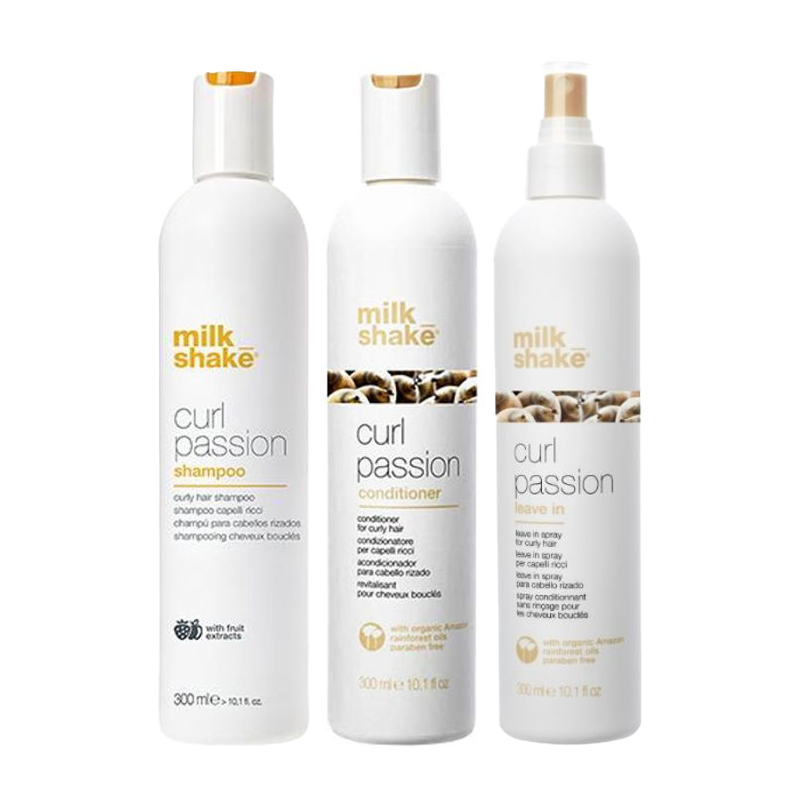
milk_shake curl passion shampoo 300ml, curl passion conditioner 300mlGently cleanse your hair while caring for your curls with this curly cleansing and conditioning pack from milk_shake. With professional-standard oils and natural ingredients, the Curl Passion Shampoo by milk_shake reinforces your hair's natural shape and eliminates frizz so it looks and feels stronger and healthier than ever. Enriched with organic milk and quinoa proteins as well as fruit extracts and organic pracaxi and babassu oils, the milk_shake Curl Passion Conditioner boosts softness and manageability, without weighing the hair down. The brand new milk_shake Leave In Conditioning Treatment is a treatment spray to help make curls soft, bouncy, flexible and long-lasting. Ingredients Leave In: Aqua (Water), PEG-40 Hydrogenated Castor Oil, Amodimethicone, Cetrimonium Chloride, Polyester-37, Polyquaternium-22, Hydrolyzed Milk Protein, Trideceth-12, Hydrolyzed Quinoa, Helianthus Annuus (Sunflower) Seed Extract, Citrus Limon (Lemon) Fruit Extract, Vaccinium Myrtillus Fruit Extract, Pyrus Malus (Apple) Fruit Extract, Orbignya Oleifera Seed Oil, Pentaclethra Macroloba Seed Oil, Parfum (Fragrance), Phenoxyethanol, Caprylyl Glycol, Citric Acid, Butylene Glycol, Benzyl Alcohol, Tocopherol, Amyl Cinnamal, Benzyl Benzoate, Benzyl Salicylate, Citronellol, Coumarin, Geraniol, Hexyl Cinnamal, Limonene, Linalool.60,17 £*Shipping: 0,00 £Secure redirect to the provider
-
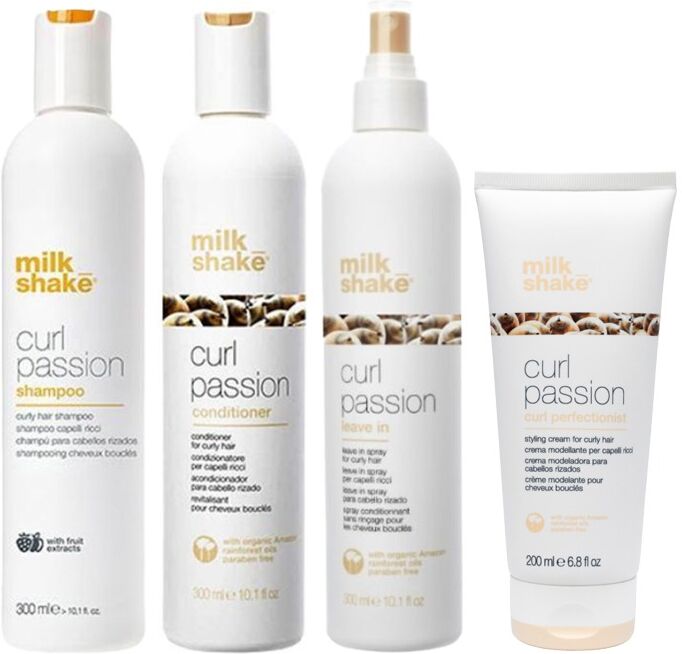
milk_shake curl passion shampoo 300ml, curl passion conditioner 300ml,Unlock the secret to beautiful, long-lasting, and frizz-free curls with the milk_shake Curl Passion collection, specifically formulated to cleanse, condition, and define all curly hair types. This ultimate range goes beyond basic hydration, infusing your hair with deep moisture thanks to nourishing ingredients like organic pracaxi and babassu oils, along with revitalizing milk proteins, fruit extracts, Integrity 41, and quinoa proteins. Start your routine with the Curl Passion Shampoo, which gently and deeply cleanses while enhancing softness and manageability without weighing your hair down. By delivering the right nourishment and incorporating cationic energy, this collection ensures that each curl naturally repels the next, providing that sought-after bouncy separation and movement. Embrace the confidence of perfectly defined, flexible, and soft curls that maintain their shape and vitality throughout the day. Experience maximum curl definition and hydration with the powerful combination of milk_shake Curl Passion Conditioner and Leave-In Conditioner. The Curl Passion Conditioner is the essential hydrating treatment designed to combat frizz, which is commonly caused by lack of moisture in curly hair. Apply this Paraben-free formula to lengths and ends to restore hydration, ensuring your curls remain bouncy and flexible. For an enhanced conditioning boost, follow up with the Curl Passion Leave-In Conditioner, a specific treatment spray that further helps make curls soft, bouncy, and long-lasting. This duo provides comprehensive care, tackling dryness and improving elasticity, setting the foundation for beautifully tamed hair. These products work synergistically to provide intense, targeted hydration, making them indispensable additions to your curly hair care regimen for optimal health and shine. Complete your styling with the milk_shake Curl Perfectionist, the ultimate curl-defining cream engineered to enhance and shape natural curls while effectively eliminating frizz. This rich cream delivers long-lasting definition, incredible softness, and brilliant shine, leaving curls disciplined and full of life. Beyond just styling, the Curl Perfectionist is your go-to solution for refreshing your curls between washes; it instantly revives shape and movement without the need to re-wet or re-style, making it perfect for daily maintenance. Infusing curls with deep moisture and that unique cationic energy, this cream ensures a beautifully defined, frizz-free, and bouncy separation every time. Invest in the full Curl Passion range to transform your hair care routine, achieving elastic, soft, and vibrant curls that are full of life and bounce. Ingredients: Curl Passion Shampoo: Aqua (Water), Ammonium Lauryl Sulfate, Cocamidopropyl Betaine, Disodium Laureth Sulfosuccinate, Sodium Chloride, Glycerin, Glycol Distearate, Polyquaternium-28, Laureth-4, Hydrolyzed, Milk Protein, Hydrolyzed Quinoa, Helianthus Annuus (Sunflower) Seed Extract, Citrus Limon (Lemon)...81,72 £*Shipping: 0,00 £Secure redirect to the provider
-
How do you calculate the reactants in chemistry?
To calculate the reactants in a chemical reaction, you first need to write out the balanced chemical equation for the reaction. Then, you can use stoichiometry to calculate the amount of reactants needed based on the desired amount of product. This involves using the coefficients in the balanced equation to set up conversion factors and then using these conversion factors to calculate the amount of reactants required. Finally, you can use the molar mass of the reactants to convert between mass and moles if necessary. **
-
What are the products and what are the reactants?
In a chemical reaction, the reactants are the substances that undergo a chemical change to form new substances called products. Reactants are the starting materials that are transformed into products during the reaction. The products are the end result of the chemical reaction, formed from the rearrangement of atoms in the reactants. The reactants are consumed during the reaction, while the products are the new substances that are produced. **
-
How do you calculate the required amount of reactants?
To calculate the required amount of reactants, you first need to determine the balanced chemical equation for the reaction. Then, you can use stoichiometry to convert the given amount of one reactant to the amount of the other reactant needed for the reaction. This involves using the molar ratios from the balanced equation to convert between moles of the given reactant and moles of the required reactant. Finally, you can use the molar mass of the required reactant to convert from moles to the required amount in grams or other units as needed. **
-
How do I know which reactants are Delta H?
In a chemical reaction, the reactants that are involved in a change in enthalpy (ΔH) are typically those that are being broken or formed. This means that the reactants that are being broken apart or formed into new compounds are the ones that contribute to the overall change in enthalpy of the reaction. To identify these reactants, you can look at the chemical equation for the reaction and identify the bonds that are being broken or formed. These are the reactants that will have a ΔH associated with them. **
* All prices are inclusive of VAT and, if applicable, plus shipping costs. The offer information is based on the details provided by the respective shop and is updated through automated processes. Real-time updates do not occur, so deviations can occur in individual cases. ** Note: Parts of this content were created by AI.